Build a Skincare Routine Builder on Shopify (No AI Required)
Learn how to build a skincare routine builder on Shopify using customer profiles and conditional rules. Match cleansers, serums, and moisturizers to skin type without a quiz app.
 Luke Tran
A skincare customer lands on your Shopify store. She has dry,
sensitive skin and is looking for a moisturizer that will not cause
redness. Your store sells 42 moisturizers. She scrolls through three
pages, reads four ingredient lists, gets overwhelmed, and leaves.
This happens every day on beauty Shopify stores. The products are
right there. The customer wants to buy. But she cannot find the one
product that matches her skin. A skincare routine builder solves this.
It asks a few questions about her skin type, concerns, and preferences,
then shows her exactly which cleanser, serum, and moisturizer fit.
Most Shopify merchants think building a skincare routine builder
requires an expensive AI quiz app. It does not. You can build one with
customer profiles and conditional rules. No AI. No monthly quiz app
subscription. Just structured profile data and matching logic.
In this post, you will learn how to build a skincare routine builder
on your Shopify store using profile-based matching. We will cover which
skin attributes to capture, how to structure your matching rules, and
how to display personalized routines on your storefront.
Why Most Skincare
Quiz Apps Miss the Mark
Skincare quiz apps are popular on Shopify. They ask a series of
questions and generate a product recommendation. The problem is that
most quiz apps are generic. They give the same moisturizer
recommendation to every customer with dry skin, regardless of
sensitivity level, ingredient preference, or price range.
A good skincare routine builder needs to consider more than just skin
type. A customer with dry, acne-prone skin needs a completely different
routine than a customer with dry, mature skin. A customer who avoids
fragrance needs different products than one who prioritizes natural
ingredients. A customer with a $30 budget needs a different routine than
one spending $120.
Generic quiz apps also tend to recommend one product at a time. A
skincare routine is a sequence: cleanse, treat, moisturize, protect. The
best skincare routine builder recommends the full routine, not just a
single product, and ensures the products work together.
What
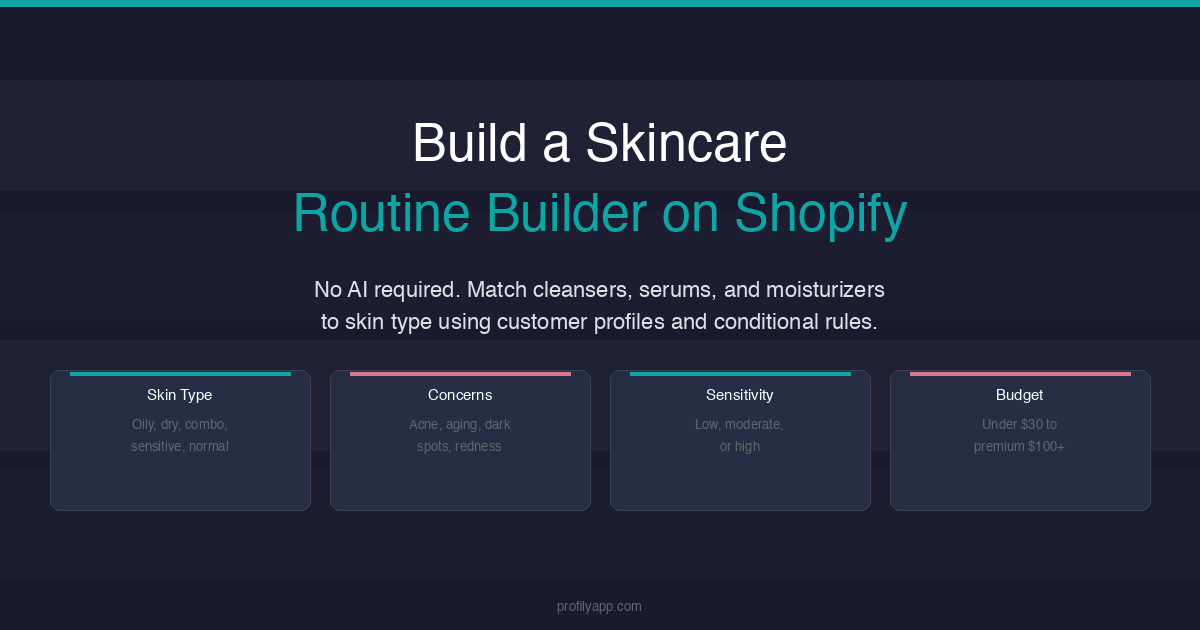
to Capture: The 5 Skin Profile Attributes That Matter
A skincare customer profile only needs five core attributes to power
a routine builder that works better than most AI quiz apps.
First, skin type. This is the foundation. The options are oily, dry,
combination, normal, or sensitive. This determines which cleanser base
and moisturizer weight your customer needs.
Second, primary skin concerns. What is the customer trying to fix?
Acne, aging and fine lines, hyperpigmentation and dark spots, redness
and rosacea, or dullness and texture. Each concern maps to specific
active ingredients: salicylic acid for acne, retinoids for aging,
vitamin C for dark spots, azelaic acid for redness.
Third, sensitivity level: low, moderate, or high. This determines
ingredient exclusions, fragrance-free requirements, and whether to
recommend stronger actives or gentler alternatives.
Fourth, ingredient preferences. Options include none (open to all),
fragrance-free only, natural and clean formulas, or vegan and
cruelty-free. This narrows the product pool to only what the customer
will actually buy.
Fifth, budget range. Categories include under $30, $30 to $60, $60 to
$100, or premium ($100 and above). This ensures every recommended
product is within the customer’s price comfort zone. A perfect routine
the customer cannot afford is not perfect.
Five attributes. That is all you need. (Some stores add a sixth, like
preferred texture or format, but five is enough to start.)
How to
Structure Matching Rules for a Skincare Routine
Once you have the profile attributes, you build conditional rules
that map each combination to the right products. The logic is
straightforward: if a customer has this skin type, these concerns, this
sensitivity, these preferences, and this budget, show them these
products.
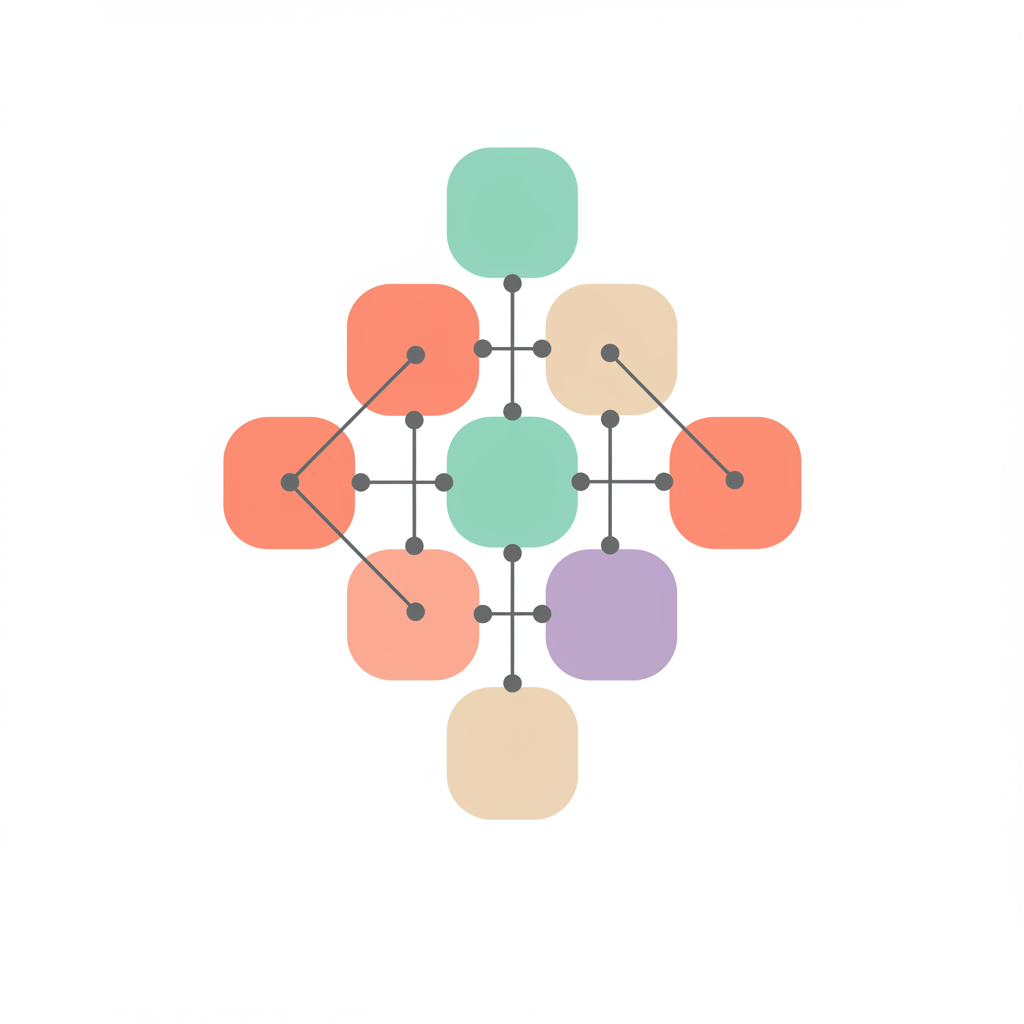
Here is how the matching logic breaks down by product type.
Cleanser matching depends almost entirely on skin type. Oily and
combination skin gets a gel or foaming cleanser. Dry and sensitive skin
gets a cream or balm cleanser. Normal skin can go either way. The
secondary filter is sensitivity. If the customer has high sensitivity or
redness concerns, exclude cleansers with sulfates, fragrance, or
exfoliating acids.
Treatment and serum matching is where skin concerns drive the logic.
Acne maps to salicylic acid or niacinamide. Aging maps to retinol,
peptides, or bakuchiol (the gentler option for sensitive skin). Dark
spots map to vitamin C or alpha arbutin. Redness maps to azelaic acid or
centella asiatica. Dryness and texture map to hyaluronic acid or lactic
acid. The sensitivity attribute determines which strength of active to
recommend: stronger formulations for low sensitivity, gentler
alternatives for high.
Moisturizer matching uses skin type to determine the base. Gel or
gel-cream for oily skin. Lotion for combination and normal skin. Cream
or balm for dry skin. Budget narrows the field. Sensitivity and
ingredient preferences remove any formula that does not comply.
SPF matching is often overlooked but should be in every routine. The
SPF recommendation is driven by skin tone (tinted vs. non-tinted),
sensitivity (mineral vs. chemical), and preference for texture (gel
vs. cream).
The result is not one product. It is a full routine of four products
that all match the same customer profile and work together.
Setting This Up with
Profily on Shopify
Here is the step-by-step setup using Profily’s profile-based matching
system. You do not need an AI quiz builder, a recommendation widget, or
any code.
Step 1: Create a skincare profile form. In Profily, define five
customer attributes: skin type (dropdown with five options), primary
concern (dropdown with five options), sensitivity level (three options),
ingredient preference (four options), and budget range (four options).
Add this form to your store’s account creation page or as a one-time
popup after the first purchase.
Step 2: Tag your products by attribute match. Go through your catalog
and tag each product with the attributes it matches. A gel cleanser for
oily, acne-prone skin gets tagged with skin_type:oily and concern:acne
and sensitivity:low-moderate. A rich moisturizer for dry, sensitive,
mature skin gets tagged with skin_type:dry and concern:aging and
sensitivity:high. (Tagging is a one-time setup. For stores with large
catalogs, start with your best-selling 20 to 30 products and
expand.)
Step 3: Build your matching rules. Under conditional rules in
Profily, create rules that connect profile attributes to product tags.
For example: “If skin type equals dry AND sensitivity equals high AND
ingredient preference equals fragrance-free, show products with matching
tags in the Moisturizer collection.” Create one rule per product type
per routine step. You will end up with roughly four rules (one for
cleansers, one for serums, one for moisturizers, one for SPF), each with
conditions for all five attributes.
Step 4: Display the routine on your storefront. Use the Profily smart
recommendations block to display the matching results. Each customer
sees their personalized routine: their cleanser, their serum, their
moisturizer, their SPF. Not what is trending. Not what other people
bought. What matches their skin.

The setup takes an afternoon. From that point forward, every customer
who fills out a skincare profile sees a personalized routine every time
they visit. No quiz retakes. No AI retraining. The rules run on the
profile data.
Why
Profile-Based Matching Beats a Quiz App for Skincare
A quiz app works once. The customer answers 10 questions, gets a
result, and that is it. If their skin changes (and skin changes with
season, age, stress, and routine), they have to retake the quiz. If they
want to browse a different category like sunscreen or eye cream, the
quiz result does not help.
A customer profile works differently. The customer fills it out once.
The matching rules run every time they browse, on every collection page
and product page. If their skin changes, they update one or two
attributes. The entire routine updates. If they browse a new category
(like SPF or eye cream), the rules already know their skin type and
concerns and match accordingly.
Profile-based matching also handles multi-product routines better
than quiz apps. A quiz recommends a product. A profile matches a
routine. For a skincare store, that is the difference between selling
one moisturizer and selling a cleanser, serum, moisturizer, and SPF in
one visit.
Get Started with
Your Skincare Routine Builder
You do not need an expensive AI quiz app to build a skincare routine
builder on Shopify. You need five customer attributes, a set of
conditional rules, and a system that matches products to profiles
instead of matching products to other products.
The result is a skincare shopping experience where every customer
sees only what works for their skin. They spend less time scrolling, buy
with more confidence, return less, and come back when their routine
needs a refill because they trust that your store actually understands
their skin.
Install
Profily on your Shopify store and build a skincare routine builder
that works with customer profiles, not generic quiz results.