Introducing Profily: Customer Profiles That Power Product Matching
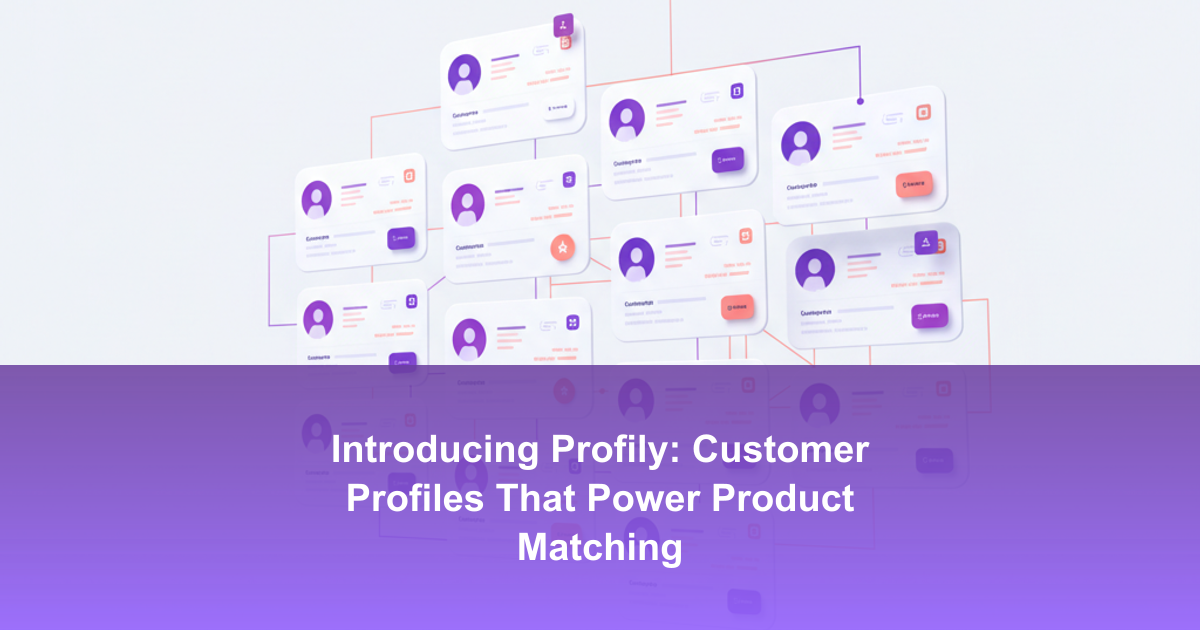
Profily brings profile-based product matching to Shopify. Build customer profiles, tag products, and match shoppers to what they need — no generic recs.
 Luke Tran
Introducing Profily: Customer Profiles That Power Product Matching
You know the problem.
A customer lands on your Shopify store, adds a few items to their cart, and then leaves. They came from a well-targeted ad. They fit your buyer persona. But somewhere between landing and checkout, the experience let them down.
Maybe they couldn’t find the right size. Maybe they weren’t sure which formula was right for their dog’s breed. Maybe they just saw a wall of products and none of them felt like they were for them.
This is the gap between knowing your customer and serving your customer. It’s the reason most customer profiles sit unused in a CRM while the storefront keeps showing every visitor the same products. And it’s costing Shopify stores more than you think.
Eighty percent of consumers say they’re more likely to buy from a brand that offers a personalized experience. Yet only twenty-nine percent of marketers believe they’re delivering personalization that actually works (McKinsey, 2025). That gap , between what customers expect and what stores actually deliver , is why we built Profily.
The Problem With Most Product Recommendations
Shopify stores have access to more customer data than ever. Purchase history, browsing behavior, email engagement, ad click data. And yet most product recommendations look something like this:
These recommendations aren’t personal. They’re generic, reactive, and frankly, lazy. They treat every customer as an anonymous shopper with no preferences, no constraints, and no identity beyond their last click.
The result? Customers feel like they’re shopping in a warehouse, not a store that understands them.
Here’s what the data tells us: shoppers who interact with personalized product recommendations are four and a half times more likely to make a purchase. But personalization doesn’t mean “people who bought X also bought Y.” It means connecting products to who the customer actually is.
What Is a Customer Profile , Really?
A customer profile is more than a purchase history. It’s a structured set of attributes that describe who your customer is and what they need.
For a pet store, that might look like:
For a beauty store:
For a baby clothing store:
When you have this data, product matching stops being guesswork. You’re not showing a customer “popular dog food.” You’re showing them grain-free adult formulas for a 65-pound active Golden Retriever with a chicken allergy. That’s the difference between a recommendation and a match.

How Profile-Based Product Matching Works
Instead of relying on purchase history alone, Profily lets you build rules that connect customer attributes directly to products. Here’s the basic workflow:
1. Ask the right questions. A short profile builder on your storefront , think 4 to 6 questions, not a 20-question survey , captures the attributes that matter for your catalog.
2. Tag your products. Match each product to the attributes it serves. This bag of food is for adult dogs, large breeds, grain-free. This foundation is for combination skin, medium coverage.
3. Set your rules. Define the logic that connects profiles to products. Rule-based matching means you control exactly what gets recommended and why.
4. Show the match. When a customer completes their profile, they see products filtered to their specific needs , not an algorithm’s best guess, but a direct match.
This approach has a few things going for it that traditional recommendation engines don’t:

What This Means for Your Bottom Line
The financial case for product matching isn’t theoretical.
McKinsey found that companies who get personalization right generate forty percent more revenue from those activities than average performers. That’s not incremental , it’s the difference between growing and treading water.
Here’s where the numbers add up for a Shopify merchant running profile-based matching:
Fewer returns. When a customer buys a product that matches their needs , the right size, the right formula, the right breed , they’re far less likely to send it back. Returns cost Shopify merchants an average of twenty to thirty percent of purchase value in shipping, restocking, and lost margin.
Higher conversion. Seventy percent of shoppers abandon their cart. A significant share of those abandonments happen because the customer wasn’t confident the product was right for them. When your store says “here’s exactly what you need,” confidence goes up. So does conversion.
Larger orders. When customers trust your recommendations, they buy more. Not because you tricked them into it , because you showed them products that genuinely fit their needs.
Repeat purchases. A customer who feels understood comes back. Profile data makes replenishment reminders and reorders simpler: you know when their puppy will need adult food, or when their baby will outgrow the 18-month size.
We Built This for You
Profily was built for Shopify merchants who sell products that aren’t one-size-fits-all. If you sell pet supplies, baby clothing, skincare, supplements, footwear, or anything where the wrong match means a return or a lost customer , this is for you.
We didn’t build another generic recommendation widget. We built a tool that lets you define what a good match looks like for your catalog, capture the customer data that matters, and connect the two.
The first version is live. It does profile building, attribute-based product tagging, and rule-based matching. Presets for pet stores, baby and kids stores, and beauty stores are available so you can get started in under 5 minutes. No coding required , Profily works with every Online Store 2.0 theme.
If you’ve been frustrated with recommendation apps that promise personalization but deliver “customers also bought,” give Profily a try.
Install Profily on the Shopify App Store
Ready to make your store feel like a shop, not a warehouse? Install Profily and build your first customer profile in under ten minutes.
Sources: McKinsey & Company, “The value of getting personalization right , or wrong , is multiplying” (2025); Salesforce, “State of Marketing” (2025).